
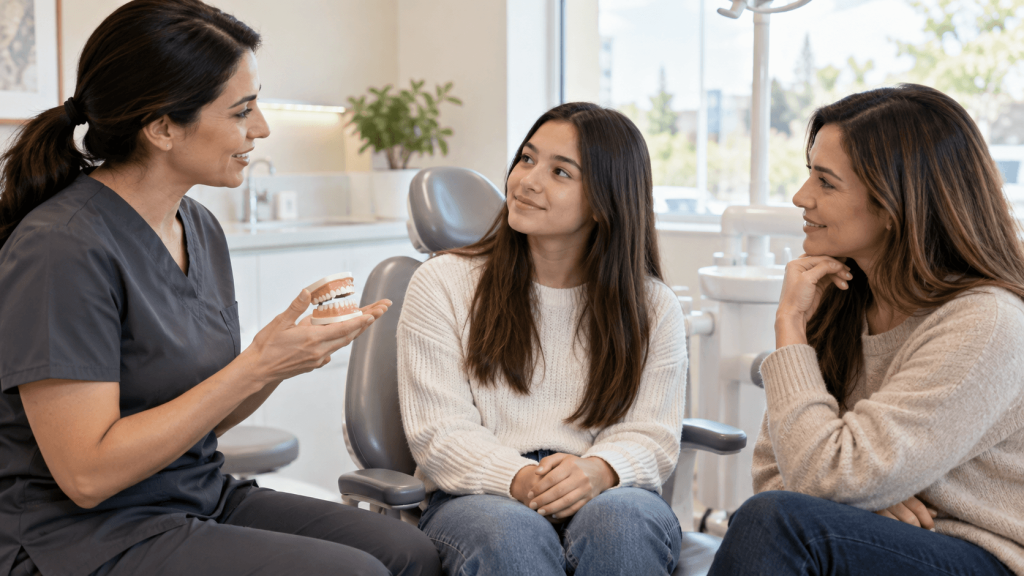
A family dentist is generally a general dentist who provides preventive, diagnostic and common restorative dental care for patients across different age groups. They may monitor oral health over time, recommend care based on individual needs and refer patients when a concern requires care outside their scope or services.
For families in North York, this can mean having a dental practice that understands how oral health needs may change from childhood through adulthood and into later life. However, not every family member requires the same treatment, appointment schedule or type of care.
What Does a Family Dentist Do?
A family dentist may provide ongoing dental care for children, teenagers, adults and older family members. Their role can include preventing dental problems, identifying concerns, treating common conditions, monitoring changes and recommending referrals when more specialized care may be appropriate.
The term “family dentist” commonly refers to a general dentist who cares for patients from more than one age group. Family dentistry is not a recognized dental specialty in Ontario. Instead, it describes how a general dental practice may provide care for people at different stages of life.
The exact ages treated and services offered can vary between practices. In general, a family dentist may help with:
- Regular dental examinations and oral health monitoring
- Professional cleanings and preventive guidance
- Identifying tooth decay, gum concerns and other changes
- Providing common restorative care when appropriate
- Monitoring children’s dental growth and development
- Discussing changes in oral health as patients get older
- Referring patients when a concern requires care outside the dentist’s scope
This approach allows care to be based on each patient rather than assuming that everyone in a household has the same dental needs.
What Preventive Care Can a Family Dentist Provide?
Preventive dental care focuses on maintaining oral health and identifying concerns before they become more complicated. Depending on the patient, a family dentist may recommend dental examinations, professional cleanings, home-care guidance and diagnostic imaging when appropriate.
Preventive care is an important part of family and general dentistry in North York. Regular dental visits give the dental team an opportunity to monitor changes in the teeth, gums and other areas of the mouth.
During preventive visits, the dental team may assess:
- Teeth and existing dental restorations
- Gums and surrounding tissues
- Signs of tooth decay or damage
- Changes that may require monitoring
- Brushing, flossing and other home-care habits
Diagnostic X-rays may also be recommended when the dentist believes they are necessary to better understand a patient’s oral health. They are not automatically required at every visit.
The same applies to appointment frequency. There is no single schedule that works for every patient. Someone’s dental history, current oral health and risk factors can all affect how often dental examinations or preventive care may be recommended.
What Restorative Dental Problems Can a Family Dentist Treat?
General dentists commonly treat many routine problems involving damaged, decayed or missing teeth. The appropriate treatment depends on the condition of the tooth, the patient’s oral health and the services available at the dental practice, so an assessment is needed before recommendations can be made.
A patient may visit a family dentist because of tooth sensitivity, decay, a damaged tooth, discomfort or changes that affect normal biting and chewing.
Depending on the situation, restorative care may involve repairing or protecting a tooth or addressing a tooth that can no longer be maintained. DSK Dental’s general dentistry services include restorative treatment, root canal therapy, tooth extractions and dentures.
These examples do not mean that every concern requires treatment. A family dentist can first assess the problem, discuss the available options and determine whether treatment, monitoring or referral may be appropriate.
How Does a Family Dentist Care for Children and Teenagers?
For younger patients, family dental care may include age-appropriate examinations, cleanings, preventive guidance and monitoring as the teeth and jaws develop. The goal is to support oral health as children grow while addressing concerns according to each child’s individual needs.
Through kids dentistry in North York, younger patients may receive dental examinations, cleanings, preventive guidance and monitoring of their dental growth and development.
Childhood dental visits can also provide an opportunity for families to ask questions about brushing, flossing, diet and other habits that may affect oral health.
A child’s first dental assessment is generally recommended within six months after the first tooth appears or by one year of age. Starting dental visits early gives a dentist an opportunity to monitor development and provide parents or caregivers with guidance as needed.
As children become teenagers, their dental needs can continue to change. A family dentist may monitor their teeth and gums, identify new concerns and adjust recommendations as they grow.
The specific care provided should be based on the individual patient rather than assuming every child or teenager requires the same approach.
How Can Family Dental Care Change for Adults and Older Family Members?
Dental needs can change throughout adulthood because oral health is influenced by a person’s dental history, gum health, existing restorations, missing teeth, home-care habits and other individual factors. A family dentist can monitor these changes and adjust recommendations when needed.
Some adults may mainly require ongoing preventive care and monitoring. Others may develop concerns involving tooth decay, damaged teeth, gum health or existing dental restorations.
As people get older, different concerns may become more relevant. For example, some patients may need additional attention to gum health, damaged teeth or missing teeth.
Age by itself does not determine what type of dental treatment someone needs. Two people of the same age can have very different oral health histories and treatment needs.
Family dental care therefore changes with the individual. The dentist can continue monitoring the patient’s oral health over time and make recommendations based on what is happening at that particular stage of life.
Can a Family Dentist Help With Gum Health and Urgent Dental Concerns?
A general dentist may assess gum problems and urgent dental symptoms, provide care that falls within the practice’s services and recommend additional treatment or referral when necessary. Patients with new or worsening dental symptoms should contact a dental professional for appropriate guidance.
Gum health is an important part of general dental care. Changes such as bleeding, swelling, tenderness or persistent irritation can have different causes and may need to be assessed.
DSK Dental provides periodontal care in Bayview Village for patients who may need additional attention to their gum health.
A family dentist may also be a first point of contact when a dental concern develops unexpectedly. Examples can include dental pain, swelling, a damaged tooth or another noticeable change in the mouth.
What happens next depends on the type and severity of the concern. The dentist may provide treatment within the practice’s scope or recommend another provider when additional care is required.
When Might a Family Dentist Refer You to a Specialist?
A family dentist may recommend a referral when a dental condition requires assessment or treatment outside the dentist’s scope, training or available services. Referral needs vary by situation, and a patient may still continue receiving routine general dental care from their family dentist afterward.
Dentistry includes recognized specialties that focus on particular areas of care. Examples include orthodontics, pediatric dentistry, endodontics, periodontics and oral and maxillofacial surgery.
Family dentistry itself is not a recognized dental specialty. A family dentist is generally a general dentist who provides care to patients across different age groups.
A referral may be considered when a patient has a concern that requires additional expertise or treatment that is not provided by the family dentist.
Being referred does not necessarily mean that the patient will stop seeing their family dentist. In many situations, a specialist can address one particular issue while the general dentist continues to manage the patient’s routine dental care.
What Happens During a Routine Family Dental Visit?
A routine dental visit may involve discussing current concerns and health information, examining the teeth and mouth, providing preventive care when appropriate and determining whether imaging, treatment or follow-up is needed. The exact visit can differ depending on the patient and the reason for attending.
Although appointments can vary, a routine visit may include:
- Discussing concerns and changes. Patients can mention pain, sensitivity, changes in their mouth or questions about their oral health.
- Examining oral health. The dental team may evaluate the teeth, gums and other areas of the mouth for changes that require attention.
- Providing preventive care. A cleaning or preventive recommendations may be provided when appropriate.
- Using diagnostic imaging when needed. X-rays may be recommended based on the patient’s dental history and current needs.
- Reviewing next steps. The dentist can explain any findings and discuss monitoring, treatment or referral when required.
Not every patient will go through these exact steps at every appointment.
The frequency of future visits should also be individualized. A dentist may recommend a schedule based on the patient’s oral health, dental history, risk factors and current concerns rather than automatically applying the same schedule to everyone.
Can Different Family Members See the Same Dentist?
Children and adults may be able to attend the same dental practice when it provides care for their age groups and their dental needs fall within its services. However, family members do not have to see the same dentist, and some may need different providers or referrals.
Having several members of a household receive dental care at one practice can be an option when the practice provides the services each person needs.
That does not mean their dental care will look the same.
A young child may need age-appropriate preventive guidance and monitoring as their teeth develop. One adult may mainly need routine preventive care, while another may require additional monitoring for gum health or restorative concerns.
Another family member may have a condition that leads to a referral.
Family dentistry is therefore about being able to support patients at different life stages while still treating every person as an individual.
What Do North York Families Ask About Family Dentists?
Families commonly have questions about what the term “family dentist” means, whether children and adults can see the same dentist and how frequently dental visits should occur. The answers depend partly on the services of the practice and the individual needs of each patient.
A family dentist is generally a general dentist who provides care to patients from multiple age groups. “Family dentist” usually describes the type of patients a dental practice may care for rather than a separate professional specialty. Exact services and ages treated can vary between practices.
No. Family dentistry is not a recognized dental specialty in Ontario. The term generally refers to general dentists who provide care to patients from different age groups rather than dentists who hold a separate specialty designation in family dentistry.
Children and adults may be able to see the same family dentist when the practice treats both age groups and their needs fall within the services offered. Some patients may still need another provider or specialist depending on their treatment requirements or personal preferences.
There is no single dental visit schedule that applies to every member of a family. The appropriate frequency can depend on each person’s oral health, dental history, risk factors and current concerns, along with the recommendations of their dentist.
Someone with ongoing oral health concerns may require a different schedule than another family member whose dental needs are different. Recommendations can also change over time.
A child’s first dental assessment is generally recommended within six months after the first tooth appears or by one year of age. Earlier professional guidance may also be appropriate if a parent or caregiver notices a dental concern that requires assessment.
Beginning dental care early can help families receive guidance and allow the dentist to monitor changes as the child grows.
How Can DSK Dental Support Your Family in North York?
DSK Dental provides general and kids dentistry for patients in North York, with services that include preventive, restorative and periodontal care. The practice is located in Bayview Village Shopping Centre and provides dental services for patients with different oral health needs.
A family dentist can play different roles as dental needs change throughout life. For one family member, the focus may be preventive care. For another, it may involve restoring a damaged tooth, monitoring gum health or determining whether a referral is appropriate.
DSK Dental is located in the lower mezzanine of Bayview Village Shopping Centre at 2901 Bayview Ave in North York.
Families can learn more by reviewing family and general dentistry in North York, kids dentistry in North York and other dental services at DSK Dental.
If you have questions about family dental care or a specific dental concern, contact DSK Dental to learn more.